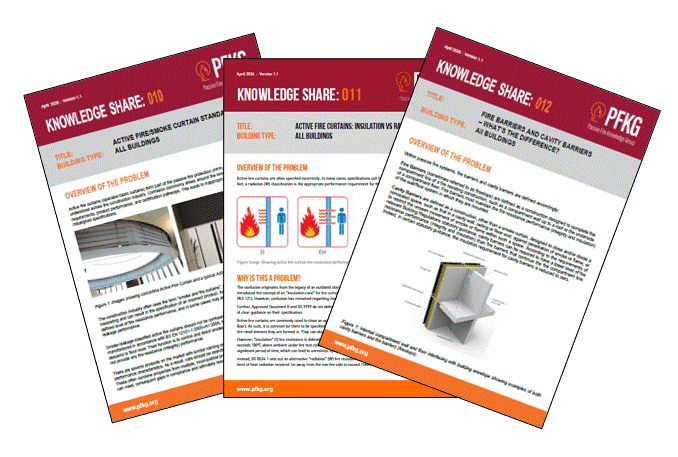
PFKG publishes new knowledge shares to address persistent confusion in passive fire specification

The Passive Fire Knowledge Group (PFKG) has published three new Knowledge Shares to help address some of the most common misunderstandings in passive fire protection.

The new Knowledge Shares are:

🔹 KS10 – Active fire/smoke curtain standards

🔹 KS11 – Active fire curtains: insulation vs radiation

🔹 KS12 – Fire barriers and cavity barriers – what’s the difference?

These are free to download now via the resources section of the PFKG website: https://pfkg.org/reports-2/
Job opportunity: Compliance and RAAC assistant

Network members Almond Housing Association are looking for an organised and customer-focused compliance and RAAC assistant to provide administrative and operational support to their Asset Management team, helping ensure the property management processes runs smoothly, accurately and efficiently.

Further details

You can find out more about the role here: https://www.almondha.org.uk/about-us/current-vacancies/compliance-and-raac-assistant/

How to apply

For the full job description and to apply, please visit the recruitment portal.

Closing date

Monday 27th July

Job opportunity: Tenant health & safety officer

Network members, Queens Cross Housing Association, are hiring a tenant health & safety officer.

Further details

For full details on this opportunity, you can visit the website: https://qcgroup.jobs.people-first.com/jobs/details/recruitment%2Fjobdetails%2F73c77077-9aa9-4614-8295-19f4b7233180

For any questions regarding this role, or to arrange a conversation with the hiring manager, please contact Recruitment@qcha.org.uk

Closing date

This vacancy will close at 1pm, Friday 31 July 2026.

𝐋𝐚𝐭𝐞𝐬𝐭 𝐚𝐧𝐧𝐮𝐚𝐥 𝐰𝐨𝐫𝐤-𝐫𝐞𝐥𝐚𝐭𝐞𝐝 𝐟𝐚𝐭𝐚𝐥𝐢𝐭𝐢𝐞𝐬 𝐩𝐮𝐛𝐥𝐢𝐬𝐡𝐞𝐝

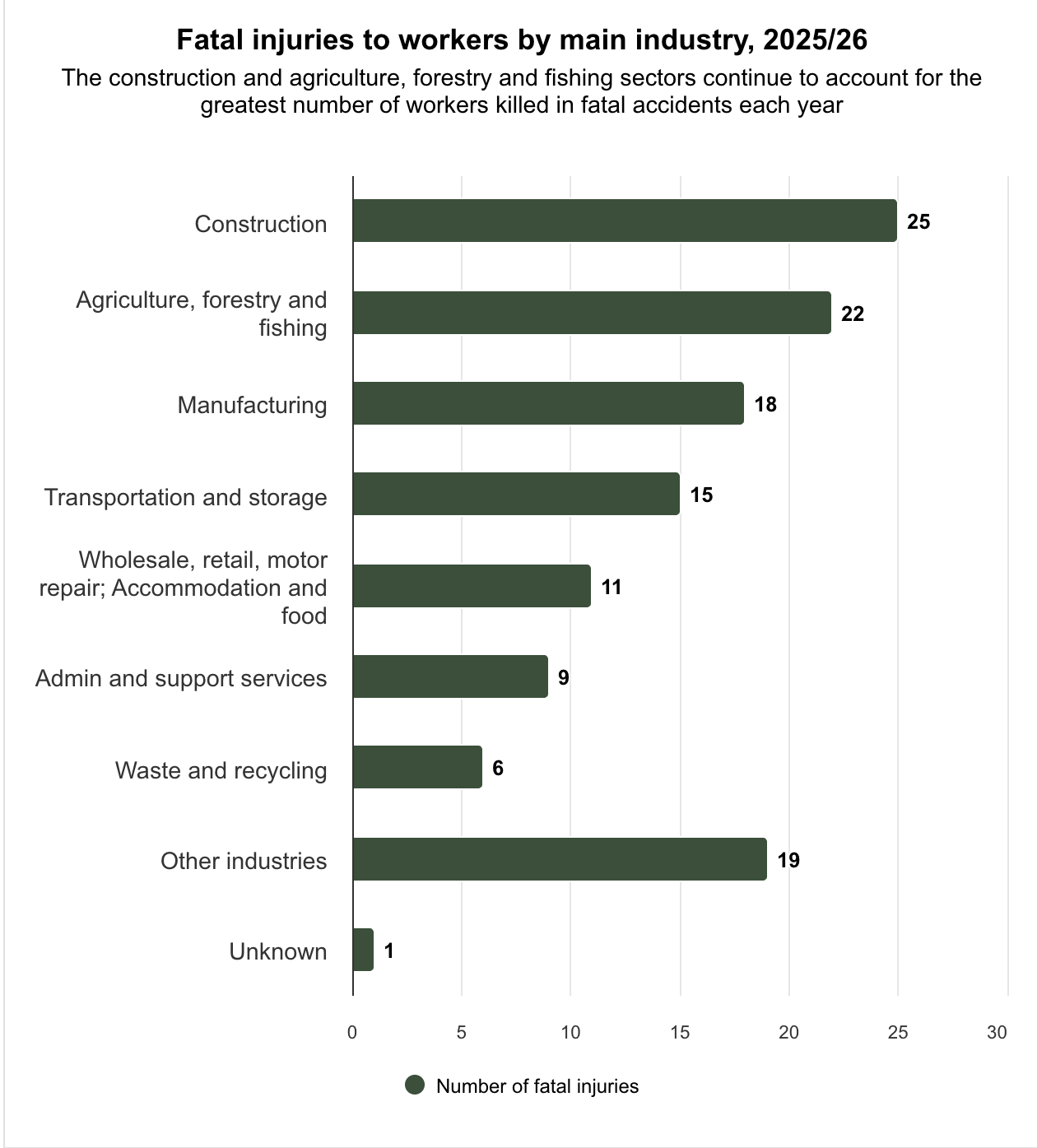
🔹 126 workers killed in work-related accidents in 2025/26 (RIDDOR)

🔹 The industries with the highest number of deaths continue to be construction (25) and agriculture, forestry and fishing (22). Of all main industry sectors, agriculture, forestry and fishing continues to have the highest rate of fatal injury per 100,000  workers (8.09) followed by waste and recycling (5.47). This compares to an average 0.37 fatal injuries per 100,000 workers across all industries combined.

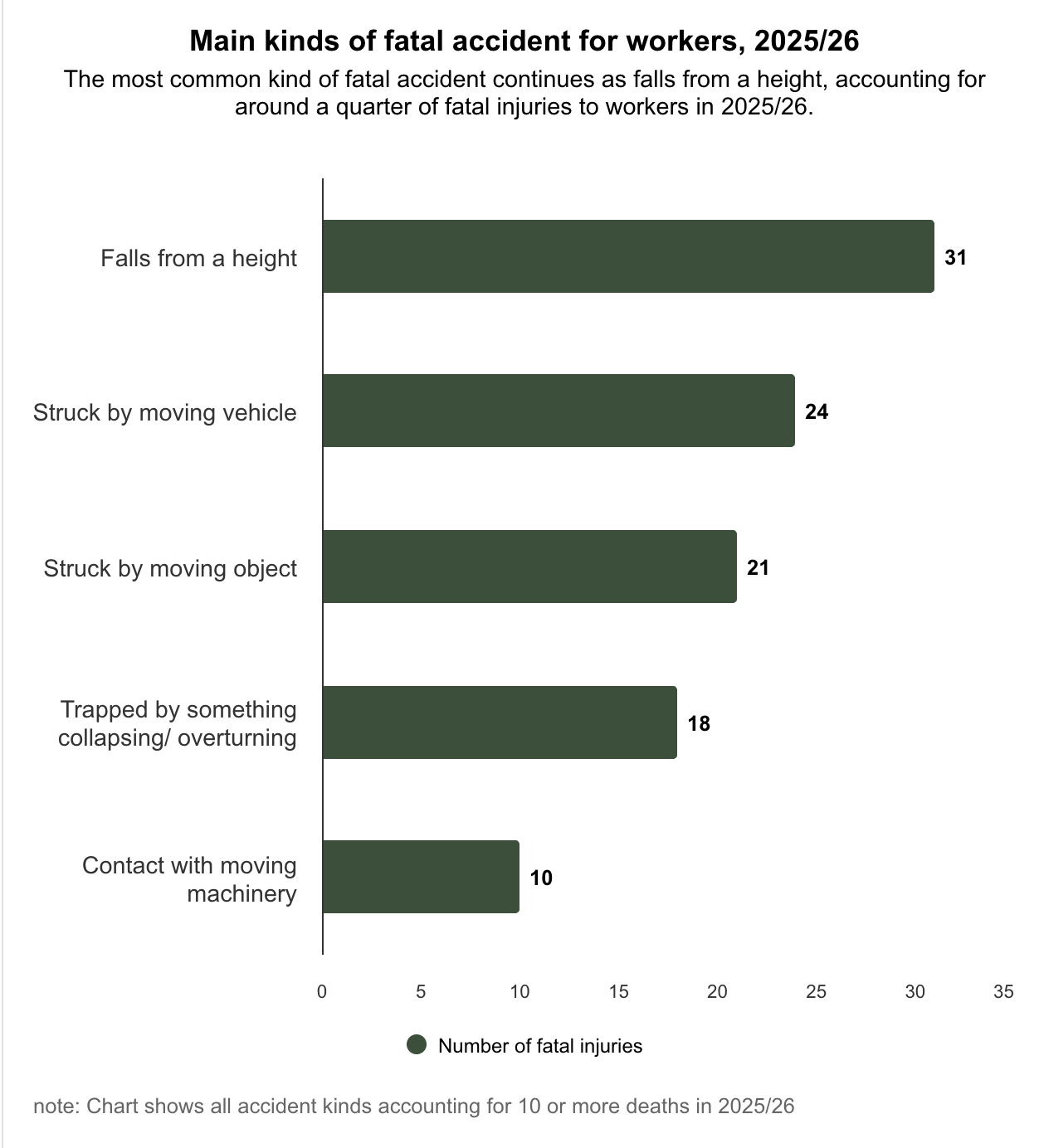
🔹 The most common cause of fatal injuries continues to be falls from a height (31), representing around a quarter of worker deaths in 2025/26.

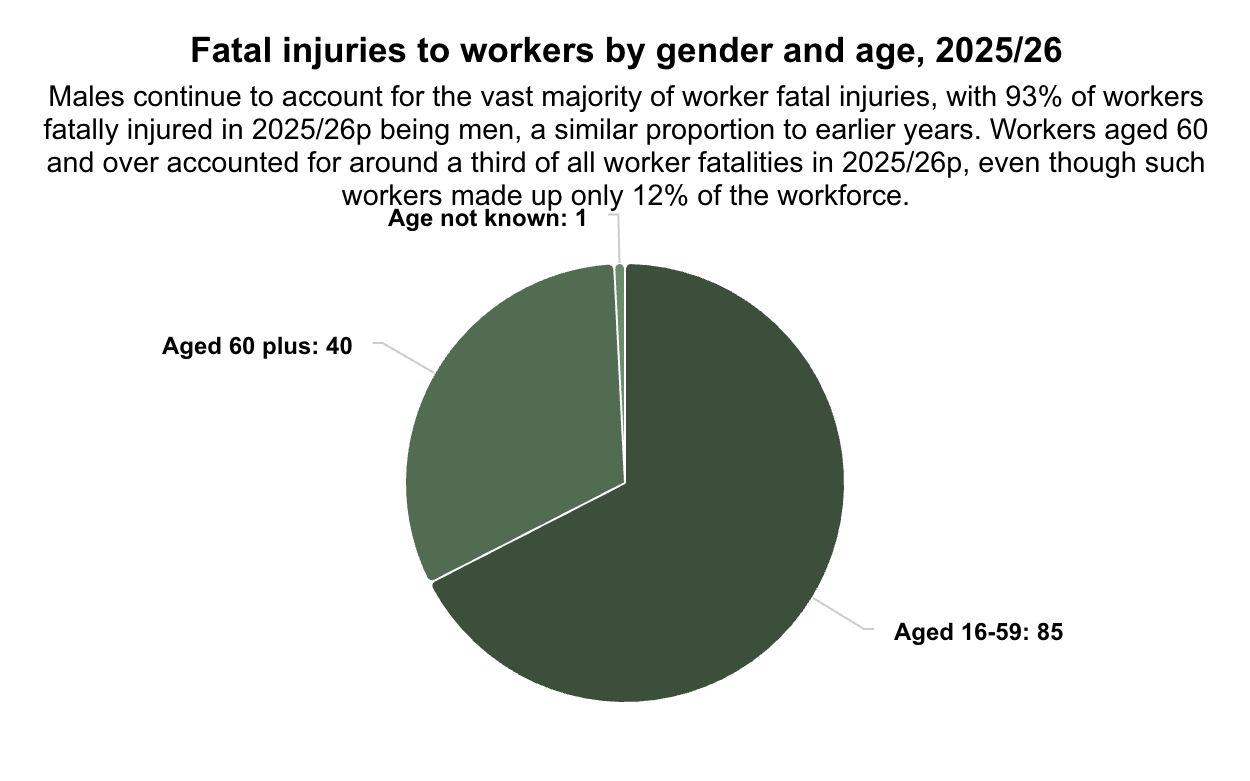
🔹 Workers aged 60 and over accounted for around a third of all fatalities during the year (40) despite that age group accounting for just 12 per cent of the workforce.

🔹 A further 104 people who were not at work were killed as a result of work-related incidents in 2025/26. This refers to members of the public who were not directly working themselves at the time of the incident.

You can read the full report here

Job opportunity: Compliance & data manager

Network members Ayrshire Housing are seeking a proactive and detail-oriented compliance & data manager to oversee regulatory compliance and data integrity.

Further details

For full details on this opportunity, you can view the recruitment pack here: https://docs.google.com/viewer?embedded=true&url=https://www.ayrshirehousing.org.uk/wp-content/uploads/2026/06/Compliance-and-Data-Manager-Recruitment-Pack.pdf

How to apply

Please submit your CV and cover letter to recruitment@ayrshirehousing.org.uk

Closing date

12 Noon on 13 July 2026.

Understanding mesothelioma risk in the trades

Men working in skilled trades experience higher rates of mesothelioma mortality than the wider population.

Asbestos was widely used in UK construction until it was banned in 1999. As a result, it can still be present in buildings constructed or refurbished before 2000, and routine maintenance, repair or renovation work may disturb it.

Trades with higher potential exposure include:

  • electrical engineering
  • carpentry and joinery
  • plumbing
  • heating and ventilation
  • flooring and wall tiling

Mesothelioma is a cancer caused almost exclusively by exposure to asbestos. It most commonly affects the lining of the lungs, but can also affect the lining of the abdomen.

Symptoms may include:

  • chest pain or shortness of breath
  • a persistent cough, difficulty swallowing or a hoarse voice
  • fatigue, a high temperature or heavy night sweats
  • unexplained weight loss or loss of appetite
  • curved nails over rounded fingertips (clubbing)

These symptoms can develop many years after exposure to asbestos. If you or someone you know working in the trades is experiencing any of these symptoms, encourage them to speak to their GP.

HSE campaigns provide free guidance and resources, including:

Regulator publishes work plans for 2026-2027

The Scottish Housing Regulator has published a summary of the main areas of work it plans to do during 2026/27.

Aligned to the priorities set out in its 2024 – 2027 Strategy, the Regulator said its plans are focused on delivering its statutory regulatory functions, listening to tenants, service users and other stakeholders, as well as being an effective public body.

This year, the Regulator is also reviewing how it works to reflect its resource allocation, and it will prepare a new Strategy for implementation in 2028.

Garry Coutts, chair of the Scottish Housing Regulator, said: “We will continue to take account of the big challenges facing tenants and social landlords, including cost inflation, rent affordability, and the acute problems around homelessness.

“In the coming year, we will have a strong regulatory focus on the quality and safety of homes that social landlords provide to tenants and their families. We will work with all our stakeholders to support the delivery of good quality social housing outcomes and shared objectives across the sector.”

You can read more here.

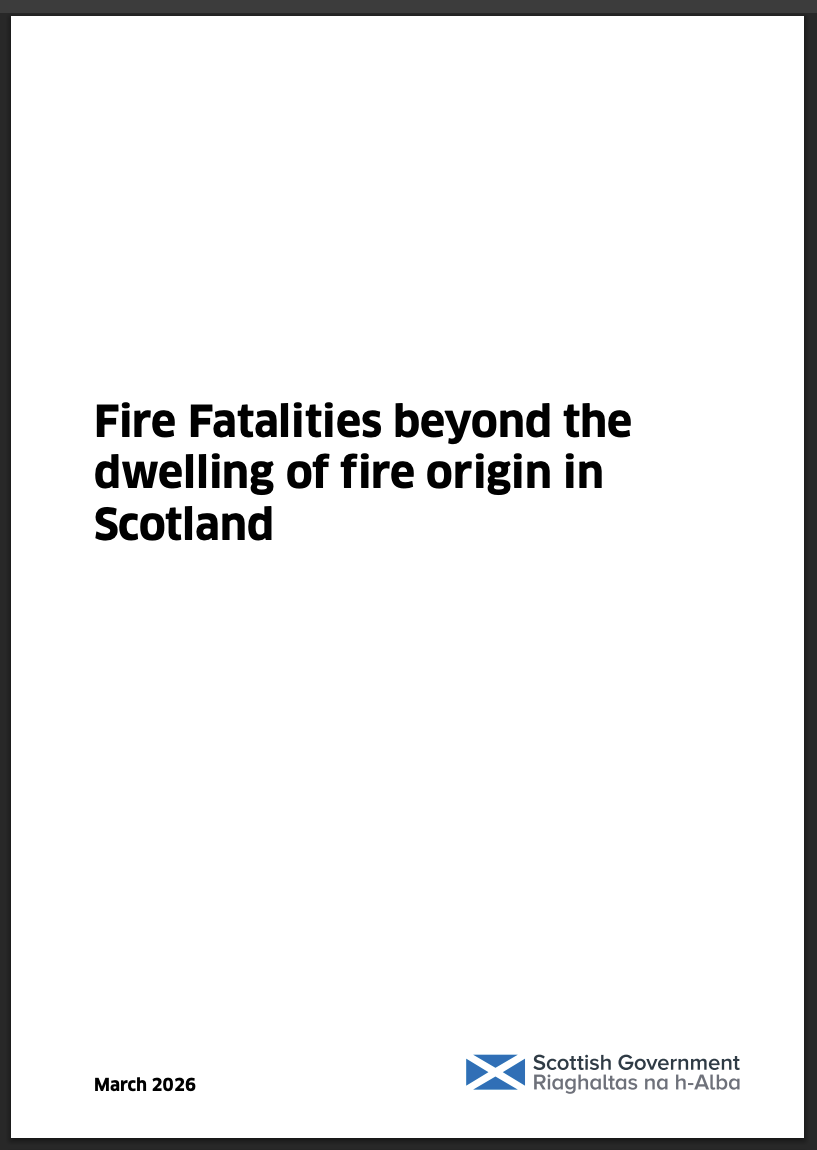
Fire Fatalities beyond the dwelling of fire origin in Scotland

The Building Standards Division (BSD) of Scottish Government requested that the Building Research Establishment (BRE) scrutinise data, which is held by the Scottish Fire and Rescue Service (SFRS), in order to determine specific fire death events and any correlations relating to external cladding (the data that the SFRS holds comes from its own Incident Recording System).

This report, published in March 2026, builds on a first phase of work which was reported on 09 June 2023 (Fire fatalities beyond the dwelling of fire origin in Scotland - Draft Interim Report).

The study reports on fire fatalities which have occurred in Scotland where the victim has died beyond the dwelling of fire origin. This specifically includes multi storey flats and tenements and whether external wall cladding was recorded as being involved during the fatal fire event.

The study is focused on 75 reports covering 81 fire fatalities. The key findings from the second phase of work are shown below:

  • In 80% of these (65 fire fatalities) the room of fire origin was determined to be -the bedroom, kitchen or living room.
  • Most fatalities occurred in the bedroom (42%).
  • There was only one case of a fire fatality occurring beyond the flat of fire origin; the death resulted from smoke inhalation. The SFRS investigation, concluded that, in their professional opinion, had the occupant been in, and / or remained within their own flat for the entire duration of the fire event and followed SFRS advice to open windows and to ‘stay put’’, this individual would likely not have died. The SFRS personnel further reported that there was no failure of the compartmentation – BRE Global noted the floor of the flat did collapse to the flat below at a later stage of the fire.
  • No mention was made by the SFRS, in any of the 75 FI reports, that cladding had either:
  1. a) been involved in any of these fires, or
  2. b) contributed to the spread of fire beyond the flat of fire origin, or
  3. c) contributed to the single fire fatality, beyond the flat of fire origin.

The full report and information contained within, can be found on the Scottish Government website here.

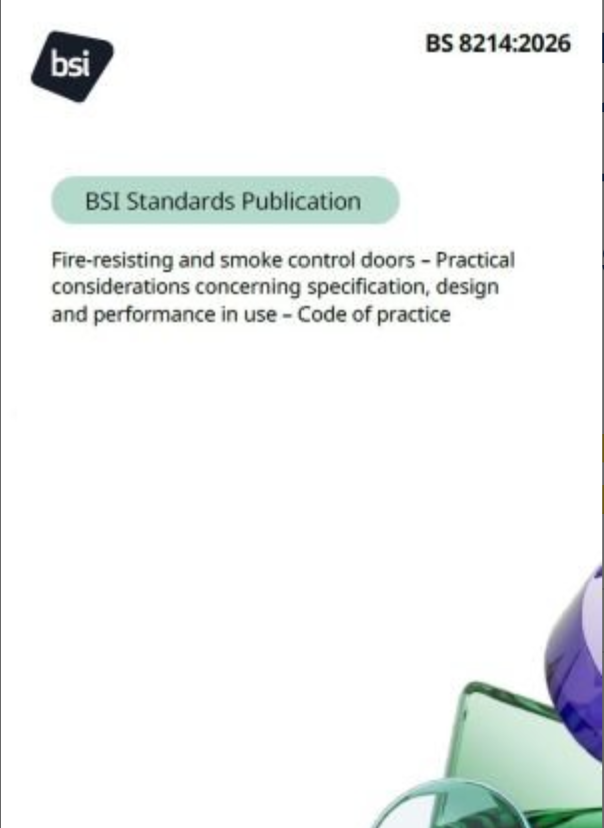
Major revision of fire door standard published

BSI has released BS 8214:2026 Fire-resisting and smoke control doors – Practical considerations concerning specification, design and performance in use – Code of practice.

The new standard, published on 20 March 2026, replaces BS 8214:2016, which has now been withdrawn and represents a substantial update to the long-standing fire door standard, marking “an important step forward in fire door guidance.”

Unlike its predecessor, which focused predominantly on timber-based assemblies, the revised document expands its remit significantly. It now “covers fire doors as a coordinated complete system however they are supplied to site, whether this is as door assemblies, doorsets or door kits.” Crucially, it no longer limits itself to timber constructions but instead “covers fire doors of many materials, including timber, steel, glazed metal, and composite designs.

This broadening of scope reflects the diversity of fire door solutions now used across the UK’s construction and refurbishment sectors. According to the revised guidance, BS 8214:2026 provides recommendations for “pedestrian fire-resisting and smoke control doors of all types and materials – including timber, metal, aluminium, and composite doors.”

A key development in the 2026 edition is its extension into areas previously lacking structured industry guidance. As the document notes, it “addresses the lack of a code of practice for metal and composite fire doors, providing new guidance for installation, maintenance and manufacture.”

BS 8214:2026 introduces clearer explanations of door classifications and performance evidence, supported by technical updates across several key areas. Notably, Section 9.4 has been strengthened to “prevent misinterpretation and non-compliant installations,” addressing a recurring industry concern.

Other updates include “improved guidance on sealing the interface between fire door frames and the surrounding structure,” with detailed recommendations on acceptable materials such as stone wool, mastic, and foam sealants.

BSI emphasises that fire doors remain critical to life safety, noting they “work in combination with other construction elements to protect escape routes and control fire and smoke spread.” The revised standard seeks to ensure they are “specified, installed, and maintained according to best practice, reducing risk and increasing trust.”

What's changed?

BS 8214:2026 supersedes BS 8214:2016 and introduces several important changes:

Expands coverage from timber doors to include fire door assemblies of all materials (timber, steel, aluminium, composite), with annexes for material-specific guidance.

Addresses the lack of a code of practice for metal and composite fire doors, providing new guidance for installation, maintenance and manufacture.

Clarifies installation requirements, especially section 9.4, to prevent misinterpretation and non-compliant installations.

Updates smoke control guidance to align with revisions in BS 9991, including best practice for sealing under-door gaps.

Incorporates changes required by post-Brexit legislation (UKCA and CE marking) and new regulatory requirements from the Building Safety Act, Fire Safety Act and related legislation.

Responds to feedback from industry associations, certification bodies and regulatory authorities.

More information about the Standard can be found on the BSI website here.

Revision to emergency lighting standard released

The British Standards Institute (BSI) has updated its code of practice for the emergency lighting of premises, setting out clear recommendations and guidance on the design, installation, wiring, and maintenance of emergency lighting systems

Superseding the 2016 version, the revised standard – BS 5266-1:2025 Emergency lighting. Code of practice for the emergency lighting of premises – aims to promote a consistent approach to emergency lighting and ensure people can safely exit or remain in a building during emergencies, while also supporting the use of essential safety equipment.

BSI states that the 2025 edition “does more than refresh the guidance”: it expands the scope of the standard to reflect advances in technology and supports a “more complete approach to safety in modern buildings”. In particular, it reflects changes to the European standards (EN 1838 and EN 50172) and the real-world experiences of emergency lighting system designers, installers, and operators.

BS 5266-1:2025 also sees an expanded scope to address local area lighting and standby lighting in addition to emergency escape lighting, with the document covering the following aspects:

  • Assisting evacuation – helping occupants leave a building safely during an emergency.
  • Protecting occupants who remain – ensuring safety when people stay in the building during an incident.
  • Supporting continued operations – enabling normal activities to continue if the normal lighting fails.

The guidance highlights the importance of keeping escape routes clear and illuminated, ensuring fire safety systems (such as call points and firefighting equipment) are kept accessible, and minimising panic risks in confined spaces such as lifts.

You can read more on the FPA website and on the BSI website.