๐‡๐จ๐ฎ๐ฌ๐ข๐ง๐  ๐ซ๐ž๐ ๐ฎ๐ฅ๐š๐ญ๐จ๐ซ ๐ฉ๐ฎ๐›๐ฅ๐ข๐ฌ๐ก๐ž๐ฌ ๐ฌ๐ž๐œ๐จ๐ง๐ ๐ซ๐ž๐ฉ๐จ๐ซ๐ญ ๐จ๐ง ๐ง๐จ๐ญ๐ข๐Ÿ๐ข๐š๐›๐ฅ๐ž ๐ž๐ฏ๐ž๐ง๐ญ๐ฌ

The Scottish Housing Regulator (SHR) has today published its annual summary of the notifiable events reported by Registered Social Landlords (RSLs) during 2024/25.

Notifiable events are things that RSLs must report to the Regulator as they could potentially pose a risk to tenantsโ€™ interests, the landlordโ€™s operations, or the broader reputation of the social housing sector.

In 2024/25, RSLs submitted 50 notifiable events within the health and safety category, as opposed to 42 the previous year.

The Regulator reported that:

๐Ÿ”น Health and Safety NEs are not reported under formal subgroups, however a review of submitted NEs in this category shows that falling architectural elements, missing safety checks and fires were the most frequently reported NEs, accounting for close to half of submitted NEs in this category.

๐Ÿ”น Staff/Contractor injuries, RAAC, cladding, missed asbestos surveys and other miscellaneous issues made up the remainder of the NEs reported in this category.

You can read more here.

๐๐š๐ญ๐ข๐จ๐ง๐š๐ฅ ๐๐š๐ง๐ž๐ฅ ๐จ๐Ÿ ๐“๐ž๐ง๐š๐ง๐ญ๐ฌ ๐š๐ง๐ ๐’๐ž๐ซ๐ฏ๐ข๐œ๐ž ๐”๐ฌ๐ž๐ซ๐ฌ ๐Ÿ๐ŸŽ๐Ÿ๐Ÿ’ ๐ญ๐จ ๐Ÿ๐ŸŽ๐Ÿ๐Ÿ“

This report sets out findings from the 2024/25 programme of engagement with the National Panel of Tenants and Service Users, commissioned by the Scottish Housing Regulator (SHR).

The Panel was established in 2013 as a way for the Scottish Housing Regulator to engage with tenants and other users of social landlord services. The Panel is used to gauge service user priorities and experiences, and findings help to shape SHRโ€™s focus as regulator of social landlords. Members include social tenants, people who have used homelessness services, residents of social rented Gypsy/Traveller sites and owners using social landlord factoring services.

Read the report here

๐‘๐ž๐ ๐ฎ๐ฅ๐š๐ญ๐จ๐ซโ€™๐ฌ ๐๐š๐ญ๐ข๐จ๐ง๐š๐ฅ ๐๐š๐ง๐ž๐ฅ ๐ ๐ข๐ฏ๐ž๐ฌ ๐ข๐ง๐ฌ๐ข๐ ๐ก๐ญ ๐ข๐ง๐ญ๐จ ๐ญ๐ž๐ง๐š๐ง๐ญ๐ฌโ€™ ๐ฏ๐ข๐ž๐ฐ๐ฌ ๐š๐ง๐ ๐ž๐ฑ๐ฉ๐ž๐ซ๐ข๐ž๐ง๐œ๐ž๐ฌ ๐จ๐Ÿ ๐๐š๐ฆ๐ฉ ๐š๐ง๐ ๐ฆ๐จ๐ฎ๐ฅ๐

More than four fifths of members who took part in the survey feel they would know how to report damp or mould concerns to their landlord. Around half had received information from their landlord about reporting damp and mould, and just over a quarter had reported a damp and mould issue previously.

This research comes after the Regulator increased its focus on social landlordsโ€™ responses to reports of damp and mould. From this year, its Annual Return on the Charter includes a new requirement for all social landlords to provide information on the length of time to resolve cases of damp and mould and the scale of open / re-opened cases.

Read more here.

Butterfly Bursary

Earlier this year we were delighted to introduce the โ€˜Butterfly Bursaryโ€™, a training and development fund which has been established to offer FREE training places on courses delivered by Housing H&S Compliance UK Ltd & HHSC Learning to members of Women in Tenant Safety Scotland (WiTSS). The Butterfly Bursary is an integral part of WiTSSโ€™ ongoing commitment to supporting women working in tenant and resident safety in social housing in Scotland and aims to provide training and learning opportunities to members to enhance their knowledge in a range of safety subjects. You can find out more about WiTSS here and about the Butterfly Bursary here.

The first free training places as part of the Butterfly Bursary were allocated earlier this year; we initially offered one free place on our popular IOSH Approved Managing Safely in Social Housing course and were inundated with applications. Due to the level of interest, we decided to give away three places!

Click here to find out what the three ladies who were awarded the training places said about why they applied and what they got from the courseโ€ฆ

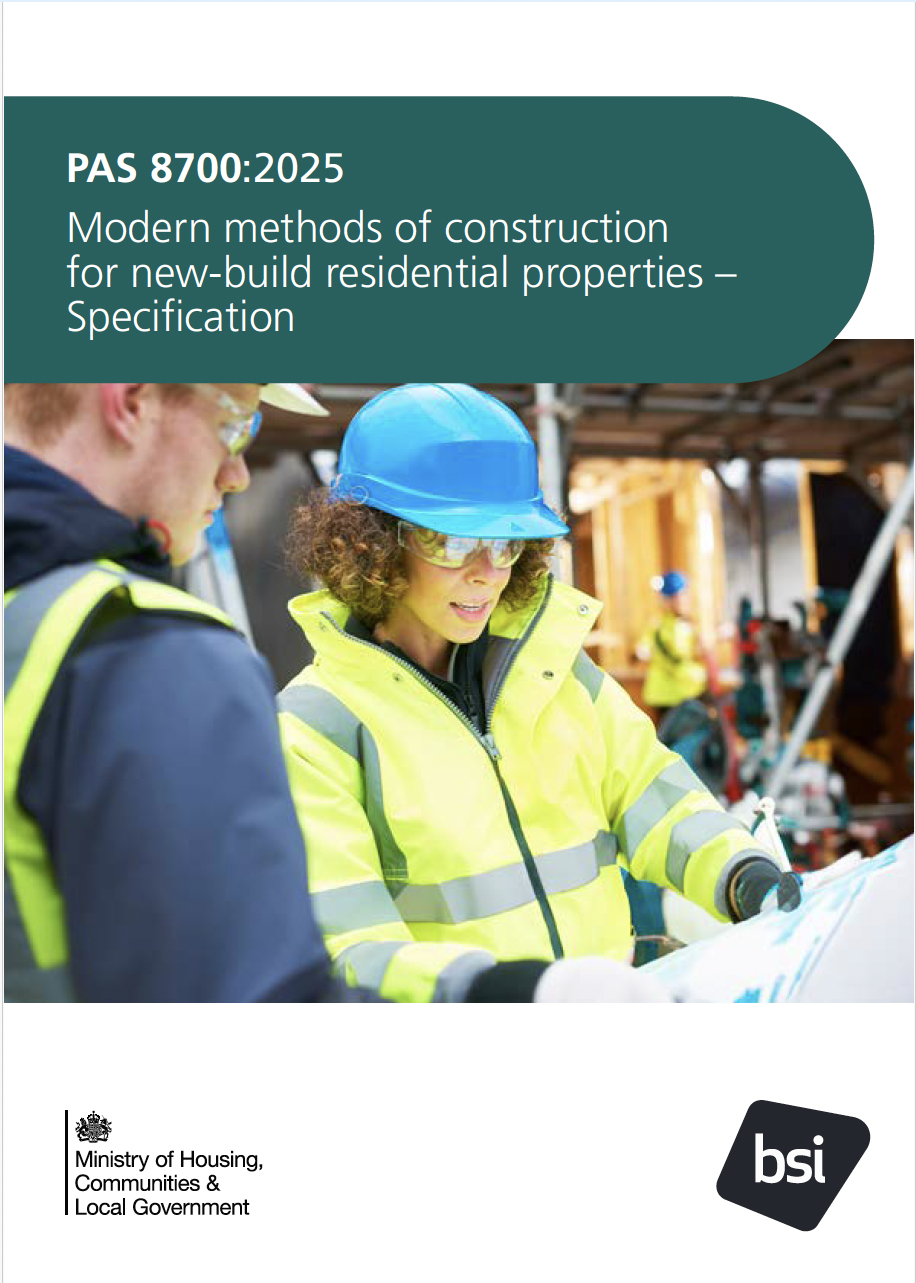
BSI publishes MMC standard for residential developments

The British Standards Institution (BSI) has published a new specification on modern methods of construction (MMC) for residential developments

Published on 30 April 2025, PAS 8700:2025ย Modern methods of construction for new-build residential properties โ€“ Specificationย sets out the process for the effective deployment of modern methods of construction (MMC) in residential development to improve stakeholder understanding and realise the benefits of MMC. As the sector has significantly evolved and matured, there is a need for greater consistency and comparability to increase the use of MMC.

This PAS has therefore been developed to provide a unified specification, which is material and technology agnostic, and to act as a coordinating document that directs readers to other technical requirements. The aim is to support the procurement, design, manufacture, construction and use of safe, resilient and repairable residential buildings that use MMC.

As BSI explains: โ€œPAS 8700:2025 is the first standard specifically designed to define the effective use of Design for Manufacture and Assembly (DfMA) and MMC in residential building projects, encompassing both entire building systems and individual elements.

โ€œIt provides provisions for the sector on the consistent application of MMC throughout all project phasesโ€”from design and manufacturing to assembly, maintenance, adaptation, and end-of-life considerations.

โ€œThe standard aligns with existing technical regulations and accreditation schemes, avoiding duplication and unifying fragmented practices into a clear, accessible specification.โ€

BSI believes that effective deployment of MMC can bring multiple benefits to building projects, including โ€œcost and timescale certainty, improved productivity, material efficiency, reduced labour, and overcoming skills shortagesโ€. It could also enable better quality control, faster delivery, sustainable use of materials, and more.

You can find out more and download the documentย here.

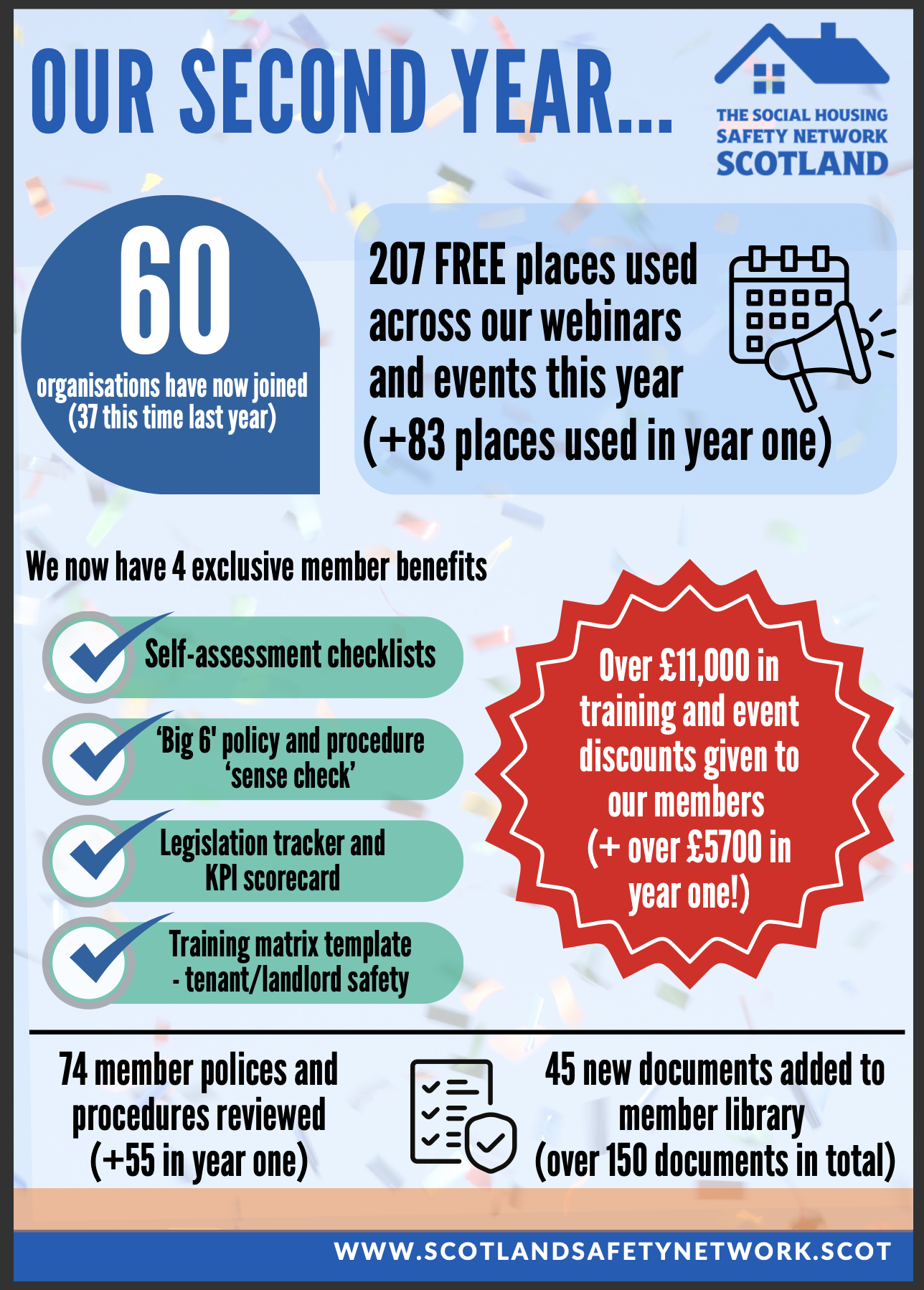
The Social Housing Safety Network Scotland turns two!

On 17th April, The Social Housing Safety Network Scotland celebrates its second birthday! Weโ€™re incredibly proud of what weโ€™ve achieved over the past two years โ€“ from membership growth, to adding new member benefits, giving away free and discounted places on webinars, events and training, networking and much more!

Weโ€™ve put together a snapshot of how the Network has grown,ย which you can view hereย (or keep reading to find out more about what the Network is and who our members areโ€ฆ)

What is The Social Housing Safety Network Scotland?

Itโ€™s a fast-growing, dedicated tenant and resident safety network for colleagues across Scotland which was established two years ago by a small group of housing practitioners who have all worked in the social housing sector for many years and are subject specialists; they bring with them practical, experience-based knowledge.

The Network was created to focus on tenant and resident safety in Scotland and to provide information, guidance and networking collaboration for local authority, housing association and co-operative landlords; we encourage our members to tell us what they would like to see and the topics areas where they would like a focus.

Membership is open to all social housing providers, including Local Authorities, based in Scotland.

Member benefits

The benefits of joining continue to grow as the Network expands, these include:

โ€ข Self-assessment checklists
โ€ข Training matrix template
โ€ข Legislation tracker and KPI scorecard
โ€ข โ€˜Big 6โ€™ policy and procedure sense check
โ€ข Dedicated resource website
โ€ข โ€˜Quick Guidesโ€™ and briefings
โ€ข Free and discounted webinars and events/get togethers
โ€ข 10% discount on training offered through Housing H&S Compliance UK Ltd
โ€ข Self-study โ€˜Knowledge Buildersโ€™
โ€ข Membership of Women in Tenant Safety Scotland (WiTSS)
โ€ข Online forum

Our membersย 

Without our members, we simply wouldnโ€™t exist!

Our members are what make the Network and are a mix of housing associations, housing co-operatives and councils across Scotland. These include organisations as far north as Shetland, Inverness and Aberdeen, down to the border in Berwickshire and out to the West Coast in Oban, as well as lots based in the towns and cities in between, including Edinburgh, Paisley, Motherwell, Glasgow and across Fife.

You can view all our membersย here.

As the Network grows, we call upon our members for ideas and feedback to ensure the content provides up-to-date, relevant information and is driven by everyone who is part of the Network. We even have an established โ€˜Advisory Panelโ€™ which consists of colleagues from our member organisations who work in the sector - they keep us focused on the โ€˜every dayโ€™ subjects that are important to everyone.

For more information about the Network, or to join us, please get in touch byย visiting our website: weโ€™d be pleased to chat to you about the benefits of membership and we can even pop out and see you, if you wish.

Scottish Housing Regulator (SHR) publishes outcome of its annual risk assessment of social landlords

On 31st March 2025 the SHR published updated engagement plans for all registered social landlords (RSLs) and local authorities as well as a summary report which shows that the majority of RSLs comply with the Regulatory Standards.

The summary report also sets out the main risks and strategic challenges facing social landlords and tenants including underlining the importance of landlords meeting the Scottish Housing Quality Standard and statutory requirements on tenant and resident safety.

In this briefing note we highlight the key outcomes relating to tenant and resident safety, although you can read the full publication here.

Falls and their impact on social housing

Falls are the biggest cause of accidental injury in the home, resulting in a staggering 80% of hospital admissions for accidental injury to people aged 65 and over in the UK. Community-based studies suggest that one in three over-65s, and half of over-80s, will experience at least one fall every year.

RoSPA estimates 212,000 falls are suffered by older adults in Englandโ€™s housing association households every year. This is thought to be a very conservative figure based on single occupancy households and without consideration of the disproportionate impacts of deprivation and poor health outcomes felt by social renters.

Falls impose an immeasurable burden on society through physical and psychological harm. Between 5 and 20% of falls cause serious injuries - for example hip fractures or traumatic brain injuries. These often require expedited property adjustment, adaptation or relocation, placing a strain on housing services that is difficult to forecast and plan for.

Injuries, dampened confidence and lost independence can lead to property neglect and reliance on care and social support - all of which damage community adhesion. Some falls might trigger a negative spiral, leading to increased vulnerability, safeguarding issues, and further complexity to interactions between renter and their social landlord.

Based on a hugely successful pilot at Staffordshire-based housing association Trent & Dove, RoSPA has developed a toolkit aimed at reducing the impact of tenant falls in social housing. The model combines staff training, home safety checks and effective partnership working to address fall risks and facilitate a measurable reduction in number of falls suffered by participants.

The 3-component toolkit contains novel materials developed specifically for the social housing sector. It includes practical ideas to support tenants reduce their falls risk and home safety check sheets to ensure tenants are given consistent and reliable advice.

You can read more and download the toolkit here.

HSE asbestos inspections

HSE inspectors are visiting the head offices of councils across the country to ensure asbestos risks are being managed effectively to keep people safe.ย 

The duty to manage asbestosโ€ฏcovers a wide range of buildings, some regulated by HSE and others regulated by colleagues in local authorities.

For further information on the duty to manage asbestos, you can:

Consultation โ€“ Scottish Government (December 2024)

Scottish Building Regulations: Proposed review of fire safety topics including Cameron House Hotel recommendations:

Fire safety risks in traditional buildings used as hotels, review of current provision on fire suppression, combustible cladding and other issues

The Scottish Government issued a consultation in December 2024 to consider changes to the standards and processes set within The Building (Scotland) Regulations 2004 (as amended) and other published guidance documents to improve provisions addressing fire safety.

The consultation seeks to obtain the views and opinions of stakeholders on a review of building standards relating to the fire safety of historic buildings converted for hotel useย and several other specific fire safety issues, to help ensure the safety of people in and around Scotland's buildings.

The consultation is a lengthy document; it includes aspects that would affect the social housing sector, including (but not limited to):

  • 2.3 Amending the scope of application of mandatory standard 2.15 โ€˜Automatic Fire Suppression Systemsโ€™ to extensions of and conversions to flats, maisonettes or social housing dwellings.
  • 2.5 Miscellaneous fire safety issues
    • 2.5.2. Low level emergency lighting
    • 2.5.3. External premises information plates
    • 2.5.4. Clause 2.7.1 of the Domestic and Non-domestic Technical Handbook (External wall cladding systemsย  ECWS)
    • 2.5.5. Regulation 8(4) and exemptions to European Classification A1 and A2 components that form part of an external wall cladding system
    • 2.5.6. Exit width from rooms in non-domestic buildings
    • 2.5.8. BS EN 13637:2015 Electrically controlled exit systems for use on escape routes

The full consultation information can be found here.

Responding to this consultation

This consultation runs for 12 weeks from 13 December 2024 with responses to this consultation to be receivedย by 7 March 2025.

Please respond to this consultation using theย Scottish Governmentย consultations Hub - Citizen Space .